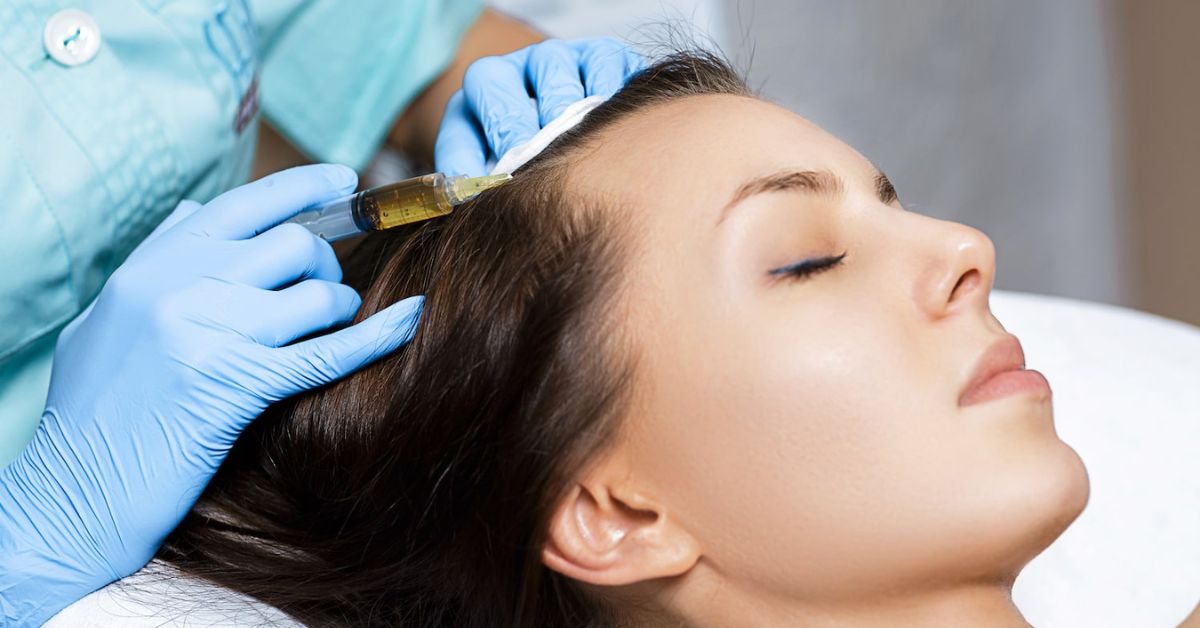
Hair Loss Treatment: Complete Guide to Regrow Hair
Losing hair can feel overwhelming. It affects your confidence, your self-image, and even your mental health. But here is the good news. Hair loss treatment has advanced dramatically in recent years. You now have more options than ever before to slow, stop, and even reverse hair loss.
About 50 million men and 30 million women in the United States alone deal with some form of hair loss. It can start as early as your teens and becomes more common with age. More than half of all men over 50 experience noticeable thinning. Women often notice it after menopause.
The key to successful hair loss treatment is understanding what causes your hair to fall out. Different types of hair loss need different approaches. What works for one person may not work for another.
This guide walks you through every major treatment option available today. From FDA-approved medications to natural remedies, from PRP therapy to hair transplants, you will find everything you need to make an informed decision about your hair.
What Causes Hair Loss?
Before choosing a hair loss treatment, you need to understand why your hair is falling out. Hair loss happens when something disrupts the natural cycle of hair growth.
Your hair goes through three phases: growing, resting, and shedding. When this cycle gets interrupted, hair falls out faster than it grows back. Genetics is the biggest cause of hair loss. Androgenetic alopecia, also called male pattern baldness or female pattern hair loss, accounts for about 95% of all hair loss cases.
This condition runs in families and involves the hormone DHT (dihydrotestosterone). DHT shrinks hair follicles over time until they stop producing visible hair. Hormonal changes also play a significant role. Pregnancy, menopause, thyroid problems, and conditions like polycystic ovary syndrome (PCOS) can trigger hair thinning. Stress is another major factor.
A condition called telogen effluvium causes large amounts of hair to shed after a stressful event, illness, or surgery. The good news is that stress-related hair loss is usually temporary and reverses once the stress goes away. Other common causes include nutritional deficiencies, certain medications, autoimmune conditions, tight hairstyles that pull on hair roots, and fungal infections of the scalp.
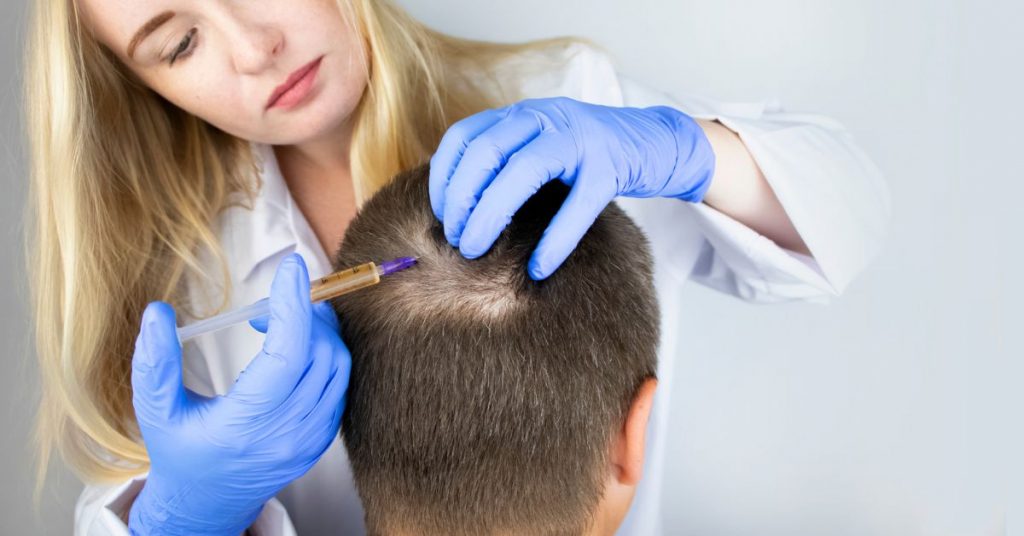
Common Types of Hair Loss
Understanding your type of hair loss helps you choose the right hair loss treatment. Here are the most common types you should know about.
| Type | Who It Affects | Pattern | Reversible? |
| Androgenetic Alopecia | Men and women | Receding hairline, crown thinning (men); diffuse thinning (women) | Manageable with treatment |
| Alopecia Areata | All ages, both genders | Round patches of sudden hair loss | Often regrows on its own |
| Telogen Effluvium | Mostly women | Diffuse thinning all over | Yes, once cause is resolved |
| Traction Alopecia | People with tight hairstyles | Hair loss along the hairline | Yes, if caught early |
| Scarring Alopecia | Men and women | Permanent loss with scarring | No, damage is permanent |
Androgenetic alopecia is by far the most common type. Men typically see a receding hairline that forms an “M” shape, followed by thinning at the crown. Women usually notice thinning across the top of the head while keeping their hairline.
Alopecia areata is an autoimmune condition where the body attacks its own hair follicles. It causes round, smooth patches of hair loss that can appear suddenly on the scalp or body.
FDA-Approved Hair Loss Treatment Options
Two medications have been the gold standard of hair loss treatment for decades. They remain the most widely recommended first-line treatments by dermatologists worldwide.
Minoxidil (Rogaine) – The Over-the-Counter Solution
Minoxidil is the most accessible hair loss treatment available today. You can buy it without a prescription at any pharmacy or online store. It comes in two main forms: a liquid solution and a foam. Both are applied directly to the scalp.
Minoxidil works by increasing blood flow to hair follicles. It shortens the resting phase of the hair cycle and pushes follicles into the growth phase faster. The 5% concentration is more effective than the 2% version, though it may cause more scalp irritation. Most people start seeing results after three to six months of daily use. Full results typically appear around the 12-month mark.
The most common side effects include scalp irritation, dryness, itching, and temporary increased shedding during the first few weeks. This initial shedding is actually a positive sign.
It means the medication is working by pushing old hairs out to make room for new growth. Switching from a liquid to a foam formula often reduces irritation for sensitive scalps. One important thing to remember is that minoxidil only works while you use it. If you stop applying it, the hair you regrew will gradually fall out within six to twelve months.
Finasteride (Propecia) – The Prescription Pill
Finasteride is a prescription medication taken as a daily pill. It works differently from minoxidil. Instead of stimulating growth directly, finasteride blocks the enzyme that converts testosterone into DHT. By reducing DHT levels in the scalp by about 60% to 70%, finasteride slows down follicle shrinkage and allows thinning hair to recover.
Studies show that finasteride stops further hair loss in about 90% of men who take it. Around 65% of users experience some degree of new hair growth. Results typically become visible after three to six months, with maximum improvement at one to two years.
Finasteride is FDA-approved for men only. It is not recommended for women of childbearing age because it can cause birth defects. The most discussed side effects include decreased libido and erectile dysfunction, which affect roughly 1 in 80 men. These side effects usually resolve after stopping the medication, though in rare cases they may persist.
Many dermatologists now consider combination therapy, using both minoxidil and finasteride together, as the most effective approach. Studies show this combination achieves 90-94% improvement rates compared to 59-80% for using either medication alone.
Emerging Hair Loss Treatment Breakthroughs in 2026
The hair loss treatment landscape is changing rapidly. After nearly 30 years with only two FDA-approved options, several breakthrough therapies are now advancing through clinical trials.
Clascoterone (Breezula)
Clascoterone is a topical androgen receptor inhibitor that showed remarkable results in Phase 3 clinical trials. It blocks DHT directly at the hair follicle without affecting hormone levels throughout the body. This makes it potentially safer than oral finasteride.
Clinical data revealed up to 539% relative improvement in hair count compared to placebo in men. Cosmo Pharmaceuticals plans to submit it for FDA approval in 2026. Experts believe it may become especially useful for women, who have fewer treatment options than men.
PP405
PP405 is a topical treatment that targets hair follicle stem cells. Unlike existing treatments that just slow down hair loss, PP405 aims to reactivate dormant follicles. In Phase 2 clinical trials, 31% of men with significant hair loss showed hair density increases of more than 20%.
Time magazine named PP405 one of the best inventions of 2025. Phase 3 trials are planned for 2026, and this treatment could eventually help restore hair in areas where current medications fail.
JAK Inhibitors
JAK inhibitors represent a breakthrough for alopecia areata, the autoimmune form of hair loss. Three JAK inhibitors baricitinib (Olumiant), ritlecitinib (Litfulo), and deuruxolitinib (Leqselvi) have received FDA approval since 2022. These drugs calm the immune system’s attack on hair follicles and allow hair to regrow in patients who previously had no effective treatment options.
Natural Hair Loss Treatment Options
Many people prefer to start with natural and less invasive approaches before turning to medications. While natural remedies rarely reverse advanced hair loss on their own, they can support overall scalp health and slow down thinning when used early.
Essential Oils and Scalp Massage
Rosemary oil is one of the most studied natural remedies for hair loss. Research suggests it may be as effective as 2% minoxidil for promoting hair growth.
You can mix a few drops with a carrier oil like coconut oil or jojoba oil and massage it into your scalp. Regular scalp massage alone improves blood circulation to hair follicles and may help increase hair thickness over time.
Pumpkin seed oil is another natural option that shows promise. It contains compounds that may help block DHT naturally. Saw palmetto supplements work in a similar way, though the evidence is still limited compared to pharmaceutical treatments.
Nutritional Support for Hair Growth
Hair needs proper nutrition to grow. Deficiencies in certain vitamins and minerals can accelerate hair loss. The most important nutrients for healthy hair include:
- Iron – Low iron levels are one of the most common nutritional causes of hair loss, especially in women
- Vitamin D – Many studies link vitamin D deficiency to increased hair shedding
- Biotin (Vitamin B7) – Supports the production of keratin, the protein that makes up hair
- Zinc – Helps maintain the oil glands around hair follicles
- Protein – Hair is made almost entirely of protein, so getting enough in your diet matters greatly
It is important to understand that supplements only help if you have an actual deficiency. Taking extra biotin when your levels are already normal will not make your hair grow faster. A simple blood test from your doctor can reveal whether nutritional gaps are contributing to your hair loss.
Stress Management
Stress is a well-documented trigger for hair loss. Chronic stress pushes more hair follicles into the shedding phase than normal. Managing stress through exercise, meditation, adequate sleep, and relaxation techniques can reduce stress-related hair shedding. This type of hair loss usually reverses naturally within six to nine months once the stressor is removed.
PRP Therapy for Hair Loss Treatment
Platelet-Rich Plasma (PRP) therapy has become one of the most popular non-surgical hair loss treatments in recent years. It uses your body’s own healing power to stimulate hair growth.
The process is straightforward. A doctor draws a small amount of your blood, places it in a centrifuge to separate the platelet-rich plasma from other blood components, and then injects the concentrated plasma directly into your scalp. The platelets contain growth factors that stimulate dormant hair follicles and promote thicker, healthier hair growth.
Clinical studies show that PRP can increase hair count by 30-40% over several months with consistent treatment. Most patients need three to four initial sessions spaced about a month apart. After that, maintenance treatments every three to six months help sustain results.
PRP therapy works best for people with early to moderate hair thinning. It cannot regrow hair on completely bald areas. The treatment is minimally invasive, uses your own blood, and has very few side effects. Most people experience only mild soreness at the injection sites.
Many hair restoration specialists now recommend PRP as a complement to other treatments. Combining PRP with minoxidil and finasteride often delivers better results than any single treatment alone. PRP is particularly effective for women because it stimulates follicle growth without involving hormonal medications.
Hair Transplant Surgery – The Permanent Hair Loss Treatment
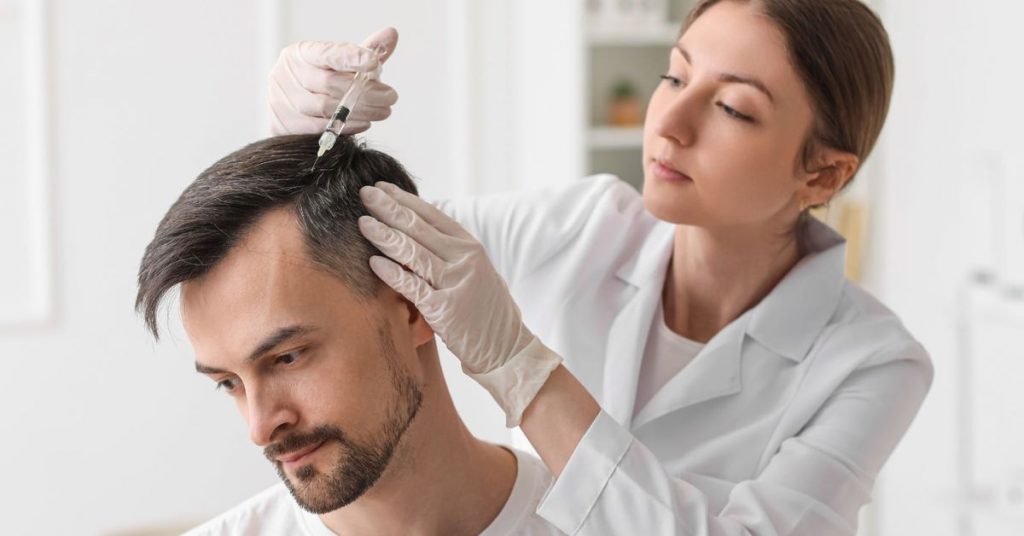
A hair transplant remains the only truly permanent hair loss treatment available in 2026. Every other option works only as long as you keep using it. Stop the medication or the therapy, and hair loss eventually returns. A transplant gives you results that last a lifetime.
How Hair Transplants Work
Hair transplant surgery moves DHT-resistant follicles from the back and sides of your scalp to thinning or bald areas. These follicles keep their genetic resistance to DHT even after being relocated. That means they continue growing permanently in their new position.
Two main techniques dominate the field today:
| Feature | FUE (Follicular Unit Extraction) | FUT (Follicular Unit Transplantation) |
| Method | Individual follicles extracted one by one | Strip of scalp removed and follicles dissected |
| Scarring | Tiny dot scars, barely visible | Linear scar at donor site |
| Recovery Time | 7-10 days | 10-14 days |
| Pain Level | Minimal | Moderate |
| Best For | Short hairstyles, smaller areas | Large areas needing maximum grafts |
FUE has become the preferred method for most patients. It extracts individual follicular units using a tiny punch tool, leaving minimal scarring and allowing faster recovery. Robotic-assisted FUE with AI-driven planning has become the standard in 2026, offering precision extraction and consistent graft quality.
Read more for info: https://styleshears.com/best-hair-clippers-for-men/
Who Is a Good Candidate?
Hair transplants work best for people with Norwood stage 3 and above hair loss. You need enough healthy donor hair at the back and sides of your scalp.
People with diffuse thinning all over may not be ideal candidates. The best results come when patients combine a transplant with ongoing medical therapy to protect remaining natural hair.
Modern hair transplants achieve a 95% graft survival rate at top clinics. The transplanted hair falls out initially, then begins growing permanently within three to four months.
Low-Level Laser Therapy (LLLT) for Hair Loss Treatment
Low-Level Laser Therapy uses red light wavelengths to stimulate cellular activity in hair follicles. The treatment is available as laser caps, helmets, and combs that you can use at home. Several devices have received FDA clearance for promoting hair growth.
LLLT works by increasing energy production within the cells of hair follicles. This enhanced cellular activity encourages follicles to stay in the growth phase longer and produce thicker, stronger hair. The treatment is painless, non-invasive, and has virtually no side effects.
Most LLLT devices require 15-30 minutes of use every other day. Results typically become visible after three to six months of consistent use.
While LLLT alone may not be enough for significant hair regrowth, it works well as part of a comprehensive hair loss treatment plan alongside medications and PRP therapy.
Hair Loss Treatment Comparison Table
Here is a side-by-side comparison to help you decide which hair loss treatment fits your situation.
| Treatment | Type | Effectiveness | Time to Results | Cost | Permanent? |
| Minoxidil | Topical medication | Moderate | 3-6 months | Low ($15-$50/month) | No |
| Finasteride | Oral medication | High | 3-12 months | Low ($10-$90/month) | No |
| PRP Therapy | Injection | Moderate-High | 3-6 months | Medium ($500-$2,000/session) | No |
| Hair Transplant | Surgery | Very High | 6-12 months | High ($4,000-$15,000+) | Yes |
| LLLT | Light therapy | Low-Moderate | 3-6 months | Medium ($200-$1,000 device) | No |
| Natural Remedies | Topical/Oral | Low | Varies | Low | No |
Tips for Choosing the Right Hair Loss Treatment
Picking the right hair loss treatment requires honest assessment of your situation. Here are some practical guidelines to help you choose.
If you are just starting to notice thinning, natural methods and over-the-counter minoxidil make a good starting point. You can add scalp massage, rosemary oil, and nutritional support alongside minoxidil for a well-rounded approach.
If your hair loss is moderate, combining minoxidil and finasteride delivers the best medical results. Adding PRP therapy every few months can boost your outcomes even further. This combination approach is what most dermatologists now recommend as the gold standard.
If you have advanced hair loss with visible bald areas, a hair transplant is likely your best option. Medications and PRP cannot regrow hair on a completely bald scalp. A transplant provides permanent coverage, and you should combine it with ongoing medication to protect your remaining natural hair.
Regardless of which treatment you choose, start early. Hair loss treatment works best when follicles are still alive but miniaturized. Once a follicle dies completely, no medication can bring it back. Early intervention gives you the best chance of keeping your hair.
When to See a Doctor About Hair Loss
Not all hair loss requires medical intervention. Losing 50 to 100 hairs per day is completely normal. However, certain signs mean you should visit a dermatologist or hair loss specialist as soon as possible.
See a doctor if you notice sudden or patchy hair loss, as this could signal alopecia areata or another medical condition. Excessive shedding that lasts more than two to three months after a stressful event also warrants professional evaluation.
If your hair loss comes with other symptoms like fatigue, weight changes, or skin problems, it could point to a thyroid disorder or nutritional deficiency that needs treatment.
A proper diagnosis is the foundation of effective hair loss treatment. Your doctor will examine your scalp, review your medical history, and may order blood tests to check for hormonal imbalances, thyroid function, iron levels, and vitamin deficiencies.
Some cases require a scalp biopsy to determine the exact type of alopecia. Getting the right diagnosis ensures you do not waste time and money on treatments that are wrong for your specific condition.
Conclusion
The world of hair loss treatment is more promising today than it has ever been. You have proven medications like minoxidil and finasteride that slow down and reverse thinning. So, you have advanced therapies like PRP that use your body’s own healing power. You have breakthrough drugs like clascoterone and PP405 entering clinical trials. And you have hair transplant surgery that delivers permanent, life-changing results.
The most important step is to act early. Hair loss treatment works best when you start before follicles are permanently damaged. Talk to a dermatologist, get a proper diagnosis, and build a treatment plan that fits your needs, your budget, and your goals.
Whether you choose medication, natural support, PRP therapy, or surgery, the options are there. You just need to take the first step.
Frequently Asked Questions
What is the most effective hair loss treatment available today?
The most effective hair loss treatment depends on your stage of hair loss. For early to moderate thinning, a combination of minoxidil and finasteride delivers the best results, with studies showing improvement rates of 90-94%.
For advanced hair loss with bald areas, a hair transplant is the only permanent solution. Many doctors recommend combining medical therapy with PRP and a transplant for the most comprehensive results. Starting treatment early always gives you the best outcome.
How long does hair loss treatment take to show results?
Most hair loss treatments take three to six months before you notice visible changes. Minoxidil and finasteride both need consistent daily use for at least three months before new growth appears. Full results from these medications can take up to 12 months.
PRP therapy shows improvements after three to four sessions over several months. Hair transplant results become fully visible after nine to twelve months as the transplanted follicles go through their natural growth cycle.
Are there any side effects of hair loss treatment medications?
Yes, hair loss treatment medications can have side effects, though they are generally mild. Minoxidil commonly causes scalp irritation, dryness, and temporary increased shedding in the first few weeks.
Finasteride may cause decreased libido and erectile dysfunction in about 1 in 80 men. These side effects usually stop after discontinuing the medication. Always discuss potential risks with your doctor before starting any treatment so you can make an informed decision.
Can natural remedies actually treat hair loss effectively?
Natural remedies can support hair health and slow down mild thinning, but they are not strong enough to reverse significant hair loss on their own. Rosemary oil has shown promise comparable to that of 2% minoxidil.
Correcting nutritional deficiencies in iron, vitamin D, and biotin can reduce shedding. Scalp massage improves blood flow to follicles. However, for genetic pattern baldness, medical treatments like minoxidil, finasteride, or PRP therapy deliver far more reliable and measurable results.
Is a hair transplant worth the cost?
A hair transplant is a significant investment, typically costing between $4,000 and $15,000 or more depending on the number of grafts needed. However, it is the only permanent hair loss treatment available.
The transplanted hair grows for life without needing ongoing medication. When you compare the lifetime cost of monthly medications and regular PRP sessions, a transplant can actually save money in the long run. Modern techniques achieve a 95% graft survival rate with natural-looking results.